
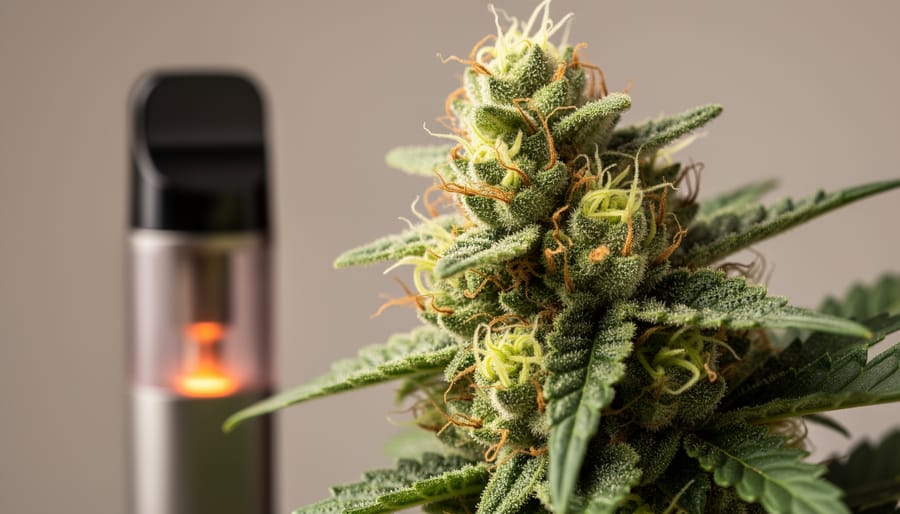
THCa decarboxylation is the chemical process that converts non-intoxicating tetrahydrocannabinolic acid (THCa) into psychoactive THC when exposed to heat. For anyone exploring our top THCA vape picks or diving into cannabinoid science for the first time, grasping decarboxylation helps you make informed choices about device settings and product selection. Every time you press the button on your vape, you’re triggering this conversion at temperatures typically between 200°C and 250°C, transforming raw cannabinoid molecules into the compounds that produce the effects cannabis users seek.
Understanding this process matters because the temperature you choose directly affects your experience. Too low, and you’re left with minimal effects and wasted product. Too high, and you risk destroying valuable cannabinoids while creating harsh vapor.
The science itself is surprisingly straightforward. THCa molecules contain an extra carboxyl group (a cluster of carbon, hydrogen, and oxygen atoms) that breaks away when heated, releasing carbon dioxide and leaving behind THC. This isn’t unique to vaping. The same reaction occurs when cannabis flower is smoked, baked into edibles, or processed into concentrates. Vaping simply offers more control over the temperature range, allowing you to fine-tune the conversion rate.
This guide walks through the chemistry behind decarboxylation, explains how different vape types handle the process, and provides practical temperature recommendations for various THCa products. Whether you’re troubleshooting weak vapor or optimizing your vape liquid guide knowledge, understanding what happens at a molecular level gives you the foundation to vape smarter.
What THCa Is and Why It Needs Decarboxylation
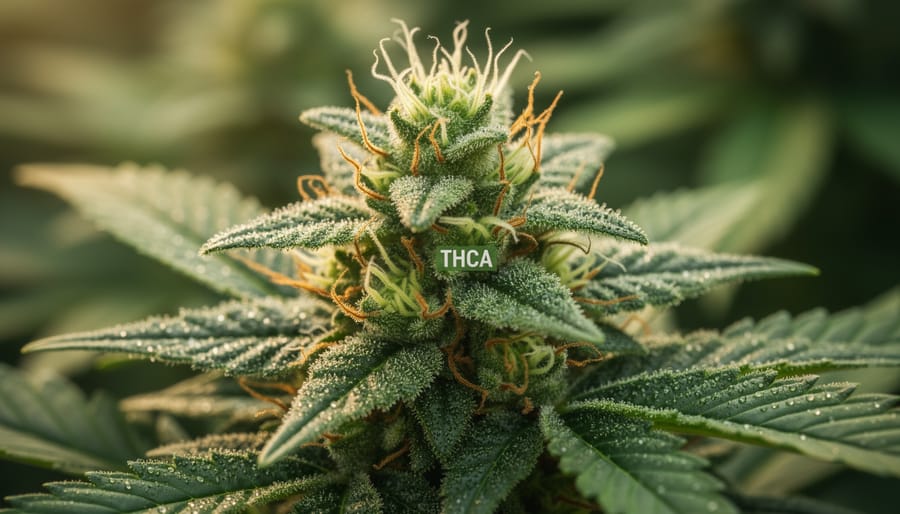
THCa, or tetrahydrocannabinolic acid, is the raw chemical precursor to THC that exists naturally in living cannabis plants. When you look at fresh flower or concentrates made from recently harvested material, you’re seeing a product dominated by THCa rather than THC itself. This distinction matters because THCa doesn’t produce the psychoactive effects cannabis is known for, it won’t get you high in its natural state.
The reason THCa behaves so differently from THC comes down to its molecular structure. That extra “A” stands for “acid,” reflecting the carboxyl group (COOH) attached to the molecule. This acidic structure prevents THCa from binding effectively to the CB1 receptors in your brain that create intoxicating effects. It’s chemically stable at room temperature, which is why you can handle raw cannabis without experiencing any psychoactive response.
- THCa (Tetrahydrocannabinolic Acid)
- The acidic, non-psychoactive form of THC found in raw cannabis plants before heat exposure.
- THC (Tetrahydrocannabinol)
- The psychoactive cannabinoid created when heat removes the carboxyl group from THCa molecules.
- Decarboxylation
- The chemical reaction that removes a carboxyl group from cannabinoid acids through heat, converting them into their active forms.
- Psychoactive vs. Non-Psychoactive
- Psychoactive compounds alter consciousness and perception, while non-psychoactive ones don’t produce mental effects despite potential therapeutic properties.
- Cannabinoid Acids
- The raw, acidic precursors to active cannabinoids like THC and CBD, present in living cannabis before heat activation.
This is where decarboxylation enters the picture. When you apply heat to cannabis, whether through vaping, smoking, or cooking, THCA decarboxylates to THC by shedding that carboxyl group as carbon dioxide (CO₂). The transformation unlocks the psychoactive potential locked inside the raw plant material.
For vapers, this conversion happens in real time inside your device’s heating chamber. Unlike eating raw cannabis, which delivers mostly unconverted THCa, vaping provides the sustained heat needed to trigger decarboxylation instantly. Understanding this process helps you grasp why temperature settings matter so much and why you can’t simply consume cannabis in its natural state to achieve the same effects you’d get from vaping it.
How Decarboxylation Works: The Chemistry Behind the Heat
Temperature Ranges and Conversion Efficiency
Different temperatures trigger decarboxylation at varying speeds and levels of completeness, directly affecting how much THCa converts to active THC in your vapor. Below 220°F (105°C), the conversion happens so slowly that you’re essentially wasting THCa, most remains in its inactive form, which explains why low-temperature sessions feel disappointingly weak. Your device might produce vapor from terpenes and plant material, but the cannabinoid you’re seeking stays locked in its acidic state.
The ideal vaping range sits between 315-430°F (157-221°C), where decarboxylation occurs rapidly and efficiently. At 315°F, conversion starts immediately and progresses steadily, preserving delicate terpenes while activating THCa over a slightly longer draw. Bump the temperature to 365-385°F, and you hit the sweet spot, fast, near-complete conversion with balanced flavor and potency. This mid-range delivers the fullest expression of your THCa product without sacrificing other compounds.
Push beyond 430°F (221°C), and problems emerge. Temperature affects cannabinoid degradation significantly at higher heat levels, converting freshly activated THC into CBN, a cannabinoid with much milder psychoactive effects and sedative properties. You’ll notice harsher vapor, a burnt taste, and effects that feel heavy or sleepy rather than clear and energizing. Terpenes combust or evaporate entirely, stripping away the flavor profile and entourage effects that make different strains unique.
Temperature precision matters because decarboxylation doesn’t operate on a simple on-off switch. A 20-degree difference can mean the gap between partial activation and full potency, or between smooth vapor and degraded cannabinoids. Quality vaporizers with accurate digital controls let you fine-tune this process, extracting maximum value from THCa-rich products without overshooting into the degradation zone.
Time Factors in the Conversion Process
Decarboxylation isn’t just about hitting the right temperature, time plays an equally crucial role in how thoroughly THCa converts to THC. The relationship between heat and duration determines whether you’re getting full potency from your cannabis or leaving active compounds on the table.
In vaping, decarboxylation happens remarkably fast. When you inhale, hot air or a heated surface contacts your material for just a few seconds, typically 3-10 seconds per draw. This brief exposure is enough because vaping temperatures (usually 315-430°F) sit well above the minimum threshold needed for conversion. The intense, direct heat compensates for the short contact time, triggering nearly instant molecular changes as you draw vapor.
Compare this to oven decarboxylation, where you’d heat cannabis at lower temperatures, around 220-245°F, for 30 to 45 minutes. The gentler heat requires extended exposure to achieve complete conversion, but it processes the entire batch uniformly.
This speed difference shapes how you use each method. With vaping, you control decarboxylation in real-time through your draw technique. Longer, slower draws increase heat exposure and may boost conversion efficiency, while quick puffs might leave some THCa unconverted. There’s no waiting period, the cannabinoids activate the moment vapor forms.
Understanding this time factor helps explain why some draws feel stronger than others. It’s not just temperature settings; it’s also about giving the heat enough contact time to complete the chemical transformation during each inhale.
Different Forms of THCa in Vaping Products
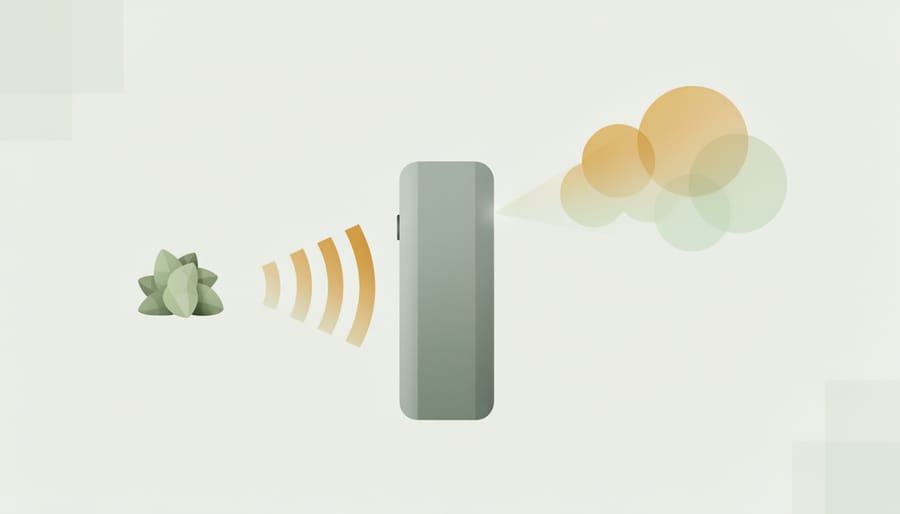
THCa shows up in your vaporizer in several distinct forms, each with its own characteristics that affect how it decarboxylates and what kind of experience you’ll get. Understanding these differences helps you choose the right product for your needs and set appropriate temperature expectations.
Raw cannabis flower remains the most common form vapers encounter. When you load fresh or cured bud into a dry herb vaporizer, you’re working with material that’s primarily THCa rather than THC. The flower’s structure means the THCa is distributed throughout plant material along with terpenes, flavonoids, and other cannabinoids. As your device heats the flower, decarboxylation happens gradually across the entire load. You’ll typically see THCa levels ranging from 15-30% in quality flower, though some strains push higher. The plant matrix slows heat transfer slightly compared to concentrates, which means you need consistent heating to convert all the available THCa.
Concentrates present THCa in more potent, refined forms:
- Raw flower: 15-30% THCa in dried buds, distributed throughout plant material
- THCa isolate/diamonds: 90-99% pure THCa in crystalline form, highest concentration available
- Live resin: 60-85% total cannabinoids with significant THCa content, preserves terpenes from fresh plants
- Fresh frozen extracts: 70-90% cannabinoids, made from flash-frozen material to retain volatile compounds
THCa diamonds or crystalline isolate represent the purest form you can vape. These translucent crystals are nearly 100% THCa, meaning almost everything in your vaporizer converts directly to THC when heated. They vaporize cleanly at lower temperatures than flower because there’s minimal plant material to combust. The trade-off? You lose the entourage effect from terpenes and minor cannabinoids unless you’re using diamonds suspended in terpene-rich sauce.
Live resin and fresh frozen extracts occupy a middle ground. These concentrates preserve more of the original plant profile by using fresh or flash-frozen cannabis, retaining THCa alongside aromatic terpenes that would evaporate during traditional curing. When you vape live resin, you’re decarboxylating THCa while simultaneously vaporizing these temperature-sensitive compounds, which creates a more complex flavor and effect profile than isolated THCa alone.
Each form requires slightly different vaping approaches. Flower needs thorough, even heating. Diamonds vaporize quickly and completely. Live resin demands careful temperature control to preserve its delicate terpene content while still converting the THCa effectively.
How Vaping Temperature Controls Decarboxylation
Your vaporizer’s temperature dial is essentially a decarboxylation control panel. Most modern dry herb and concentrate vapes let you choose precise temperatures, giving you direct influence over how much THCa converts to THC and how quickly that conversion happens.
Variable temperature devices offer the most control. These vaporizers let you set exact temperatures, typically ranging from 300°F to 430°F (149°C to 221°C). Starting at lower temperatures around 315-325°F (157-163°C) initiates gentle decarboxylation while preserving delicate terpenes that evaporate first. You’ll get flavourful vapor with mild effects as conversion begins. Raising the temperature to 365-385°F (185-196°C) accelerates decarboxylation significantly, converting THCa more completely and releasing a broader spectrum of cannabinoids. This middle range produces balanced effects and decent vapor production. Pushing toward 400-430°F (204-221°C) achieves near-complete decarboxylation, maximizing THC availability but potentially degrading heat-sensitive terpenes and producing harsher vapor.
When you choose the right vape kit consider whether you want temperature precision or simplicity. Preset mode devices offer convenience with settings labeled “low,” “medium,” and “high” or color-coded options. These modes correspond to temperature ranges designed for different experiences. Low presets generally sit around 320-350°F (160-177°C), favouring flavour and partial decarboxylation. High presets typically run 390-420°F (199-216°C), prioritizing potency through more aggressive conversion.
The relationship between temperature and compound preservation matters more than many vapers realize. Terpenes like myrcene and limonene start evaporating around 310-350°F (154-177°C), while cannabinoids including THC vaporize between 315-430°F (157-221°C). This overlap means your temperature choice determines not just how much THCa converts but which supporting compounds survive to modulate effects. Lower temperatures preserve more terpenes and minor cannabinoids like CBC and CBG, which contribute to the entourage effect.
Understanding how e-cigarette technologies evolved helps explain why temperature control became standard in cannabis vaporizers. The precision now available lets you tailor decarboxylation to your needs. Want maximum potency from THCa concentrates? Start at 380°F (193°C) and climb to 410°F (210°C). Prefer flavourful sessions with THCa flower? Hold steady between 340-370°F (171-188°C) and accept slightly slower conversion.
Experiment systematically by adjusting temperature in 10-15 degree increments across sessions, noting differences in vapor quality, effects, and duration. This hands-on approach teaches you how temperature shifts decarboxylation efficiency with your specific products and device.
Practical Applications and Uses
Understanding how THCa decarboxylation works translates directly into better vaping sessions. When you know what’s happening at the molecular level, you can fine-tune your experience instead of guessing why your vapor feels weak or harsh.
Choosing the Right Temperature for Your Goals
If you’re vaping THCa-rich flower or concentrates for immediate effects, start around 360°F (182°C) and work upward. This ensures efficient conversion without rushing into the higher ranges where terpenes start to degrade. Medical users seeking consistent symptom relief benefit from precision here, a steady 380°F (193°C) often hits the sweet spot for balanced cannabinoid delivery without excessive throat irritation. Recreational users chasing maximum potency might push toward 410-430°F (210-221°C), accepting some terpene loss for stronger psychoactive effects.
Maximizing Potency from THCa Products
THCa diamonds and crystalline concentrates pack concentrated potential, but only if you apply adequate heat. Many vapers who complain about “weak dabs” are simply running their devices too cool, around 300-320°F (149-160°C), leaving significant THCa unconverted. Bump that temperature to 380-400°F (193-204°C) and you’ll unlock the full psychoactive potential locked inside those crystals.
Troubleshooting Weak Effects
When your vapor tastes fine but doesn’t deliver expected effects, incomplete decarboxylation is often the culprit. Check your device’s actual temperature (not just the display setting, which can be inaccurate) and ensure you’re heating long enough for the conversion to complete. A five-second puff at 350°F might not finish the job that a ten-second draw would accomplish.
Strain Selection and Decarboxylation
High-THCa strains respond differently to heat. Terpene-rich varieties benefit from lower initial temperatures (340-370°F / 171-188°C) that preserve flavor while still converting THCa, then you can step up the heat for subsequent draws. THCa-dominant concentrates with minimal terpenes tolerate aggressive temperatures better, making them ideal for users who prioritize potency over taste.
What Happens When Decarboxylation Goes Wrong
Getting the decarboxylation process wrong can turn a promising vaping session into a disappointing waste. The most common mistake is running your device too cool. If your vaporizer hovers below 300°F (149°C), you’re barely scratching the surface of THCa conversion. You’ll notice weak, underwhelming effects even from supposedly high-potency products. The THCa passes through without activating, leaving you with little more than plant flavor and frustration.
On the flip side, cranking the heat too high creates its own set of problems. Temperatures above 450°F (232°C) push THCa past optimal conversion into degradation territory. Your THC breaks down into CBN, a far less potent cannabinoid that produces sedative rather than psychoactive effects. You’ll taste it immediately, harsh, almost burnt vapor that scratches your throat. Terpenes, those aromatic compounds that shape flavor and effects, start evaporating and degrading above 350°F (177°C), leaving you with flat, acrid vapor stripped of nuance.
Uneven heating compounds both problems. Cheap vaporizers or those with old, degraded heating elements create hot spots that simultaneously under-convert cool areas while scorching others. You get inconsistent effects, wasted product, and residue buildup that further reduces performance. Regularly clean vape coils and heating chambers to maintain even heat distribution.
To avoid these issues, invest in a device with precise temperature control and proven heating consistency. Start around 350-375°F (177-190°C) for balanced conversion, then adjust based on your experience. Watch for signs: weak effects mean go higher, harsh vapor means dial it back. Replace worn coils and heating elements before they compromise your sessions.
Frequently Asked Questions About THCa Decarboxylation and Vaping
Does all the THCa in my vape convert to THC? Not necessarily. Conversion efficiency depends on your device’s actual chamber temperature, how long the material stays heated, and how evenly heat distributes. Most quality vaporizers achieve 85-95% conversion when set correctly, but cheaper devices with hot spots or poor temperature control may leave some THCa unconverted. If you’re getting weaker effects than expected from high-THCa products, incomplete decarboxylation is often the culprit.
Can you vape THCa without it converting? Technically yes, but you wouldn’t want to. Heating THCa below roughly 220°F keeps it mostly in its acidic form, which means you’d inhale vapor with minimal psychoactive effect. Some users interested in THCa’s potential anti-inflammatory properties might seek this, but standard vaporizers aren’t designed for such low temperatures. Most devices start around 280-300°F at their lowest settings, well into the decarboxylation range.
How do I know if my vaporizer reaches proper decarboxylation temperatures?
Check your device’s specifications or manual for its temperature range. Most dry herb vaporizers display the set temperature digitally, though the actual chamber temperature may vary by 10-20°F. If your device shows readings between 315-430°F, you’re in the effective decarboxylation zone.
Is pre-decarbed THC better than vaping raw THCa?
Not for vaping purposes. Your vaporizer decarboxylates THCa instantly during use, so pre-decarbing offers no advantage and may actually degrade some terpenes through double-heating. Save pre-decarbing for edibles and tinctures where heat isn’t part of consumption.
What’s the difference between vaping THCa flower versus concentrates?
THCa concentrates typically contain 70-90% THCa compared to 15-30% in flower, so they decarboxylate into much higher THC concentrations per hit. Concentrates also require slightly higher temperatures (380-430°F) for complete vaporization, while flower vapes efficiently at 350-390°F.
Why does my vapor taste harsh at higher temperatures?
Temperatures above 420°F start degrading THC into CBN and combusting terpenes, creating that burnt, acrid taste. This over-decarboxylation wastes your material and produces harsher throat hits without improving effects.
Can I tell if decarboxylation happened by looking at my vaped material?
Yes. Properly decarboxylated material turns light to medium brown and becomes dry and crumbly. If it’s still green or only slightly tan, your temperature was too low for complete conversion.
Understanding these fundamentals helps you debunk vaping myths you might encounter online, particularly claims that vaping doesn’t activate cannabinoids properly or that you need special equipment. The reality is straightforward: any vaporizer reaching 315°F or higher will decarboxylate THCa effectively. The variables that matter are temperature accuracy, heating consistency, and knowing how to adjust settings for different product types. Once you grasp how heat transforms THCa into THC in real time, you can troubleshoot weak sessions, avoid wasted material, and dial in your device for consistently satisfying results.
Understanding THCa decarboxylation transforms vaping from guesswork into an informed practice. When you know how heat converts THCa into active THC, you’re no longer just pressing buttons, you’re controlling a precise chemical reaction that determines your entire experience.
Temperature isn’t just a setting. It’s the variable that decides whether you’re wasting potential, achieving optimal conversion, or degrading valuable compounds. The difference between 300°F and 430°F isn’t arbitrary; it’s the gap between minimal effects and full activation, between preserved terpenes and burnt flavor.
This knowledge empowers practical decisions. You’ll choose devices with accurate temperature control, select products that match your vaping style, and troubleshoot weak sessions with confidence. Whether you’re vaping flower, concentrates, or THCa diamonds, understanding what happens inside your device gives you the tools to optimize results.
Experiment within the established ranges. Start at moderate temperatures around 350-375°F and adjust based on your preferences and the product you’re using. Pay attention to vapor quality, effects, and flavor. The science provides the framework, but your experience refines the details. Respect the process, and you’ll consistently get better results from every session.